
“It’s Just a Photograph”
Understanding the Real Cost of Fine Art Photography
Have you ever looked at a framed fine-art photograph and quietly wondered, “Why does it cost that much? It’s a photograph.”?
I know I have—or at least I did before entering the fine-art world with my own work.
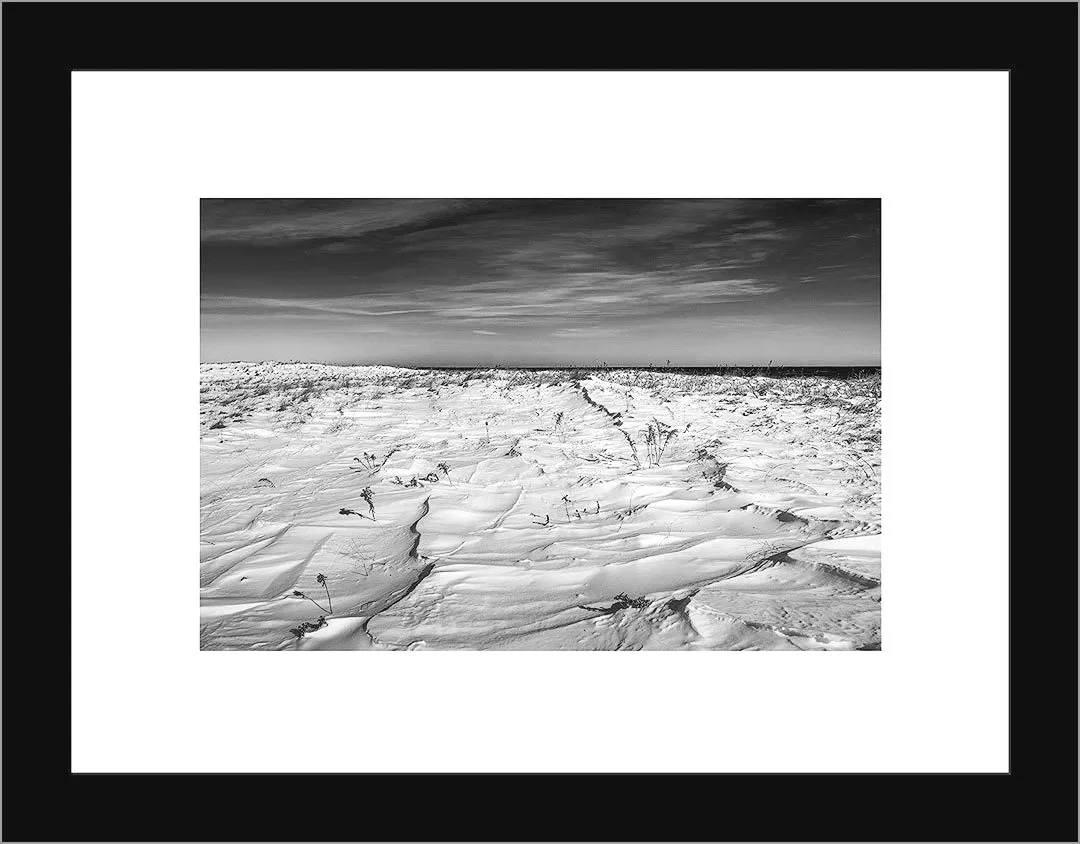
Technically and literally, yes, it is a photograph. But what is hanging on the gallery wall is very different from a snapshot taken with a phone, uploaded to a commercial photo lab, and slipped into a ready-made frame.
The common misconception is that a photographer simply takes a picture, prints it, puts it in a frame, and attaches a price tag. In reality, creating a fine-art photographic print involves a long chain of equipment, technical knowledge, artistic decisions, specialized materials, and careful craftsmanship.
More importantly, each step is intended to accomplish one thing: create an artwork that faithfully represents the photographer's vision and will remain beautiful on your wall for many years.
So, where does the cost come from?
It Starts With the Camera
Fine-art photographers generally work with professional or high-end interchangeable-lens cameras—today including both DSLR and mirrorless systems—often equipped with large, high-resolution sensors.
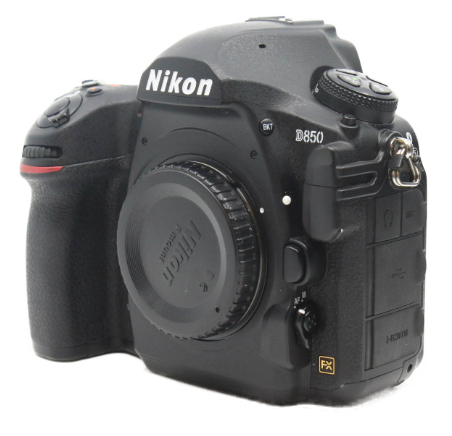
The purpose isn't simply to have "more megapixels." Resolution, dynamic range, color information, low-light performance, and the quality of the original digital file all become increasingly important when an image is enlarged.
A photograph that looks spectacular on a six-inch phone screen may reveal its limitations very quickly when printed three or four feet across.
Professional camera bodies capable of producing files suitable for large fine-art prints commonly cost thousands of dollars before a lens is ever attached.
And the camera is only the beginning.
The Lens May Cost More Than the Camera
Photographers often say that cameras come and go, but good glass lasts for years.
The lens has an enormous influence on image sharpness, contrast, color rendition, distortion, depth of field, and ultimately the character of the photograph.
A professional photographer may carry several lenses to cover landscapes, wildlife, architecture, macro photography, or other subjects. Individual professional lenses can cost anywhere from hundreds to many thousands of dollars.
In some forms of photography—particularly wildlife—the lens alone can represent an investment greater than the family car many of us drove years ago.
Keeping Everything Steady
Then there is the tripod.
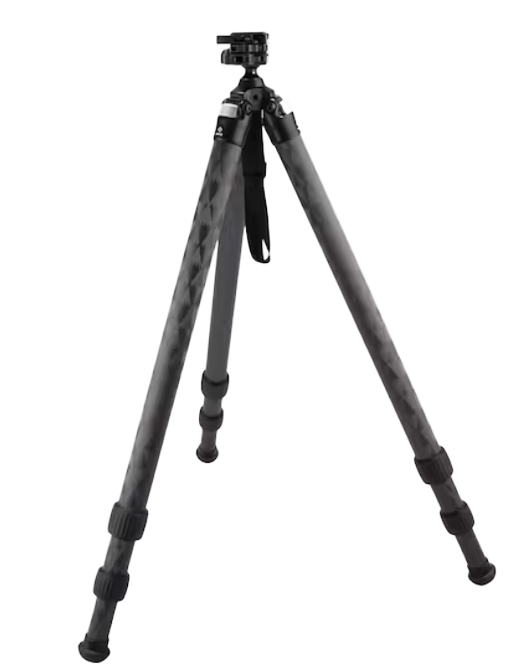
It doesn't sound particularly glamorous, but a professional tripod and head are critical tools for many types of fine-art photography.
Landscape photographers may work with long exposures lasting several seconds or even minutes. Architectural photographers need precise composition. Macro photographers require extremely careful positioning. Even when shutter speeds are relatively fast, a sturdy tripod encourages the deliberate composition that separates creating an image from simply taking one.
Like everything else in a professional workflow, quality matters. A tripod has to reliably support thousands of dollars' worth of camera equipment while sometimes standing in sand, water, snow, wind, or uneven terrain.
The Photograph Still Isn't Finished
Pressing the shutter is only the beginning of creating the final artwork.
Once the image is captured, it enters what photographers call the digital darkroom.
That requires a powerful computer capable of processing very large image files. A single high-resolution photograph can occupy hundreds of megabytes while it is being edited, and photographers may work with thousands of images during the course of a year.
Storage, backup drives, memory, processing power, and graphics capability are all part of the infrastructure behind the finished photograph.
Then comes the monitor.
For serious photographic work, the monitor must be capable of accurately displaying color, brightness, contrast, and tonal detail. A standard office monitor may produce an attractive picture, but "attractive" and "accurate" are not necessarily the same thing.
Color Calibration Matters
This is where color calibration enters the equation.
Fine-art photographers use specialized hardware and software to calibrate their monitors so that the colors displayed on screen conform as closely as possible to recognized color standards.
But calibration doesn't end with the monitor.
The printer, ink, and paper must also work together predictably. Different papers absorb and reflect ink differently. A photograph printed on a glossy photographic paper will not reproduce color and contrast exactly the same way when printed on a heavily textured matte fine-art paper.
Custom or manufacturer-supplied ICC color profiles help translate what the photographer sees on a calibrated monitor into what the printer actually places on paper.
This process is called color management, and when it is done properly, you should never know it happened.
You simply see a beautiful print.
Professional Editing Software
The digital darkroom also requires professional software.
Programs such as Adobe Lightroom and Photoshop allow the photographer to refine exposure, color balance, tonal relationships, contrast, sharpening, cropping, and countless other aspects of the image.
This doesn't necessarily mean radically altering reality.
Often, the objective is exactly the opposite: to overcome the limitations of the camera and print process so the finished photograph conveys what the photographer experienced when the image was created.
There is also an artistic component. Two photographers can stand in exactly the same location, photograph exactly the same scene, and create two completely different pieces of artwork.
The camera records information.
The photographer creates the interpretation.
Then We Have to Print It
Fine-art photographers generally have two choices: send their work to a professional fine-art printing laboratory or produce their prints themselves.
Neither option is inexpensive.
Outsourcing removes the investment in printing equipment, but professional archival printing laboratories charge accordingly for their expertise, materials, equipment, proofing, packaging, and shipping.
Printing in-house provides the artist with considerably more control, but it requires another substantial investment.
Professional large-format photographic printers can use eight, ten, or more pigment-based ink colors to reproduce extremely subtle variations in color and tone.
And those inks are expensive. Our large format, pigment ink Epson printer employs ten in cartridges, each costing approximately $150. Our smaller format, also uses ten cartridges, each running over $80.
Very expensive.
There is also maintenance ink, cleaning cycles, test prints, failed prints, print-head maintenance, and the inevitable amount of material consumed while achieving the final result.
Not every sheet that enters the printer ends up in a frame.
The Paper Is Part of the Artwork
Fine-art photographs are not necessarily printed on ordinary photographic paper.
Depending upon the image, a photographer may choose a baryta paper, cotton rag, textured matte surface, luster paper, metallic surface, or another archival medium.
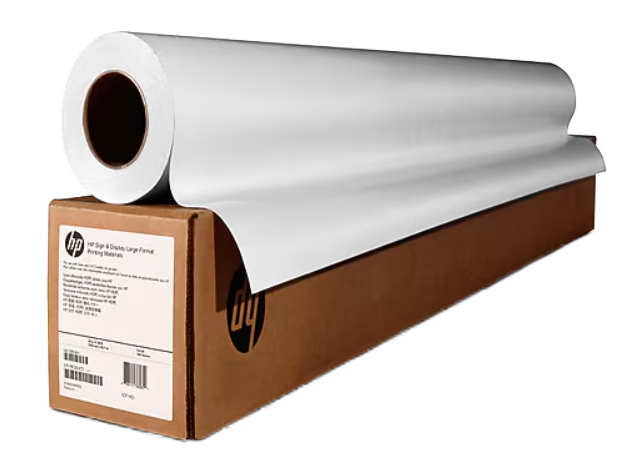
Some premium fine-art papers are made from 100-percent cotton and contain no optical brighteners or acids that could accelerate deterioration.
The choice isn't arbitrary.
Paper affects blacks, highlights, color saturation, apparent sharpness, texture, and even the emotional character of the finished image.
A delicate monochrome landscape might call for a soft, matte cotton paper, while another photograph may benefit from the deeper blacks and greater contrast available from a baryta or luster surface.
Selecting the paper is part of creating the artwork.
In some presentations, an appropriate protective coating or varnish may also be applied, particularly with canvas or other exposed print surfaces, to provide additional protection from ultraviolet light, moisture, abrasion, and environmental contaminants.
Archival Materials Continue Behind the Photograph
What you don't see can be every bit as important as what you do.
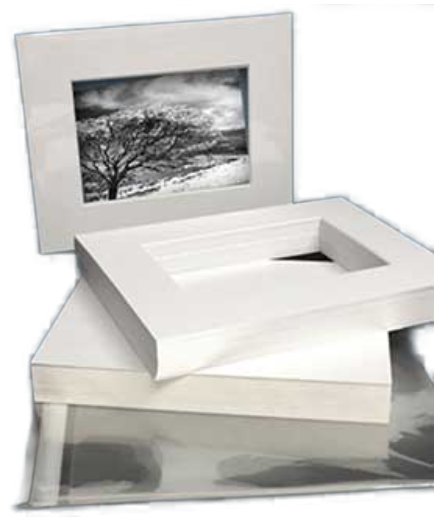
Fine-art prints should be mounted and matted using archival, acid-free materials whenever possible.
Ordinary cardboard and inexpensive mounting materials may contain acids that migrate into the artwork over time, potentially causing staining, discoloration, or deterioration.
Archival mounting boards, hinges, mat boards, backing materials, and protective papers cost more because they are designed to protect the artwork rather than simply hold it inside the frame.
And Then There Is the Frame
A quality frame is much more than decoration.
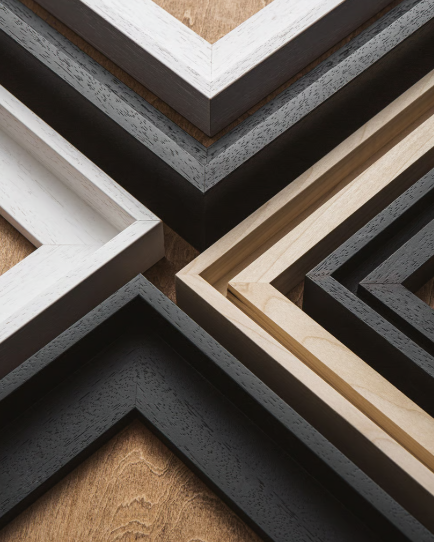
It protects the artwork, provides structural support, complements the photograph, and becomes part of the visual presentation.
Solid wood moulding, professional joinery, archival matting, backing boards, dust covers, hanging hardware, and labor all contribute to the finished piece.
There is a reason professionally framed artwork looks different from a photograph placed in an inexpensive department-store frame.
The frame is part of the artwork's presentation—and part of its protection.
Don't Forget the Glass
Standard picture-frame glass is inexpensive.
High-quality glazing isn't.
Conservation glass can filter much of the ultraviolet light that contributes to fading. Museum-grade glass can combine UV protection with sophisticated anti-reflective coatings that make the glazing nearly disappear when viewed from the front.
Non-glare and museum glazing can add substantially to the cost of framing, particularly as artwork becomes larger.
Yet it allows the viewer to see more of the photograph and less of the room reflected in front of it.
And We Haven't Even Discussed the Photographer
Perhaps the easiest cost to overlook is the one that cannot be purchased from an equipment supplier: experience.
A fine-art photograph may represent decades spent learning composition, lighting, exposure, color, printing, and presentation.
It may require driving hundreds of miles, returning to the same location repeatedly, waiting for the right season, waking before sunrise, standing in snow, working beside the ocean, or watching the sky for the few minutes when light and atmosphere finally come together.
Hundreds—or thousands—of photographs may be created before one earns a place on a gallery wall.
Equipment alone does not create fine art any more than owning expensive brushes creates a great painting.
The tools enable the artist to work.
The artist still has to create the image.
So, What Are You Really Buying?
When you purchase a fine-art photograph, you aren't simply purchasing ink on a piece of paper.
You are purchasing the culmination of the original vision, the photographer's experience, professional photographic equipment, travel and fieldwork, digital processing, color management, archival pigment inks, fine-art paper, mounting materials, matting, protective glazing, framing, and the considerable amount of time required to bring all of those elements together.
Most of that work is invisible when the finished photograph reaches the gallery wall.
And that is exactly the way it should be.
You shouldn't look at a fine-art photograph and think about printers, calibration devices, editing software, mat board, or mounting materials.
You should look at it and feel something.
Perhaps it reminds you of a place you once visited. Maybe it brings back a memory, creates a sense of peace, makes you smile, or simply causes you to stop walking through the gallery for a few moments longer than you intended.
That is when all of the equipment, technology, craftsmanship, and years of experience have done their job.
So the next time you find yourself standing in front of a framed photograph and thinking, “That's a lot of money for a photograph,” take another look.
There may be considerably more hanging on that wall than first meets the eye.
I deliberately softened a few of the technical claims from the original—particularly the DSLR and megapixel language—because professional mirrorless cameras now dominate much of the market, and image quality is about considerably more than megapixel count. I also added the photographer's experience, travel, failed attempts, proofing, maintenance, and time, because those may actually be the most important missing elements in explaining fine-art pricing.