
Chasing the Longest Light
June 21, 2026 marks the official start of astronomical summer in the Northern Hemisphere, and each year I try to celebrate the solstice the only sensible way a landscape photographer can—by chasing a sunset.
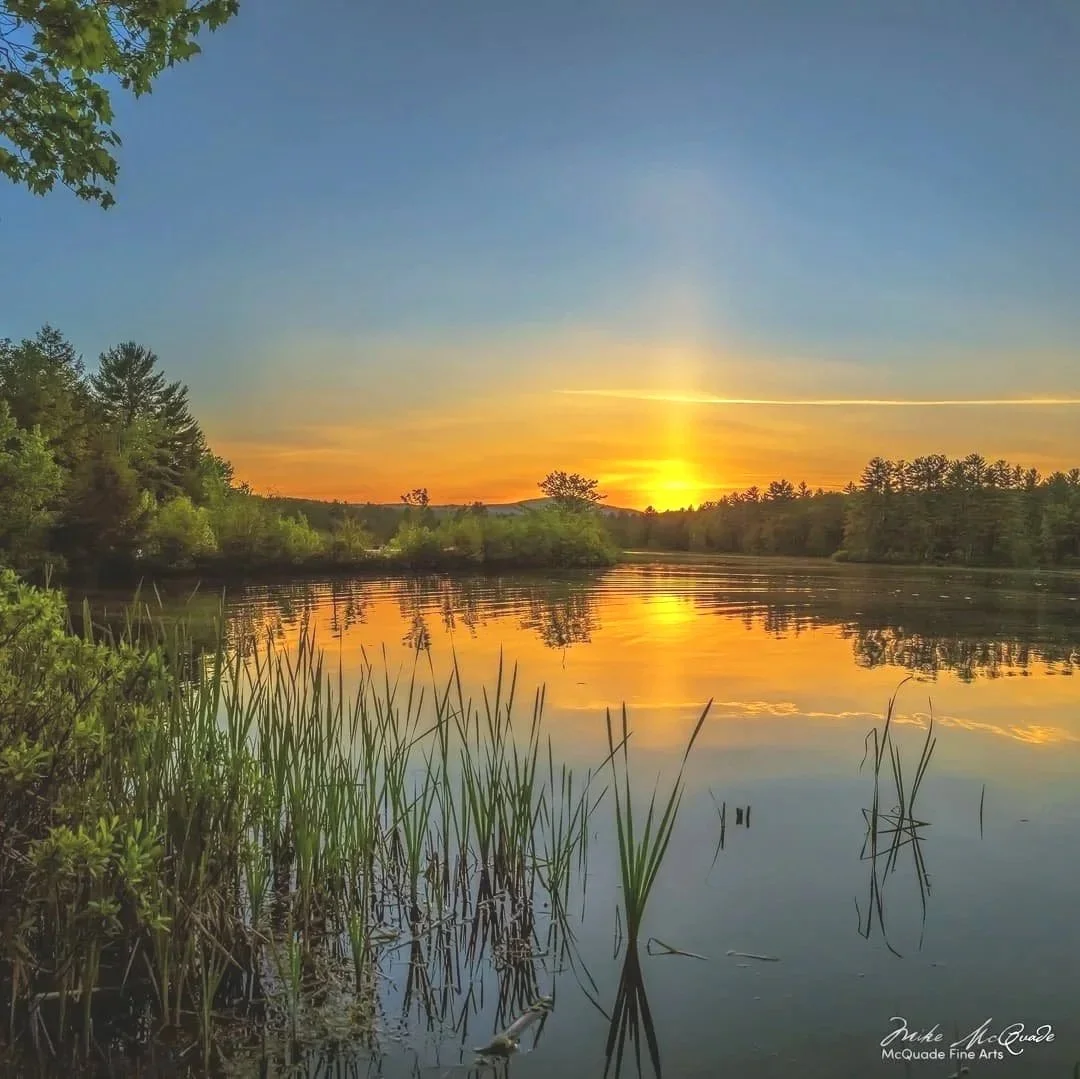
Sunset on the Summer Solstice
Several years ago, on a warm solstice evening, I headed to a nearby lake with a clear view of the western horizon. My plan was simple: wait for just the right clouds, use their reflections on the water, and come home with a dramatic longest-day-of-the-year image.
Naturally, the clouds ignored the plan.
With the sky less interesting than I had hoped, I had to find a new foreground. That is when the shoreline grasses caught my eye—the same grasses you see rising from the water in this image. Unfortunately, the best angle was not from shore. It was from the lake.
Luckily, I had water shoes in the truck and was wearing shorts. With camera and tripod in hand, I slid down the bank and stepped into the shallows. The bottom was much mushier than expected, which immediately started a whole new line of thought involving leeches, snapping turtles, and whatever else might enjoy ankles.
But the light was dropping fast, so there was no time for bravery—only photography.
I crouched low with the camera just inches above the water, trying to frame the grasses against the golden reflection of the setting sun. Every small move sent ripples across the surface, ripples I had to wait to clear before I could snap the shutter. The shutter speed, aperture, and ISO all had to be balanced carefully as the light faded and the evening breeze moved through the reeds.
The finished image looks peaceful. The process was more like a slow-motion balancing act in questionable mud.
In the end, the sunset did not give me the sky I had imagined. Instead, it gave me something better: glowing water, quiet grasses, and a reminder that sometimes the best photograph is not the one you planned.
Sometimes it is the one waiting a few inches above the water.
Another Summer Solstice image: Acadia National Park
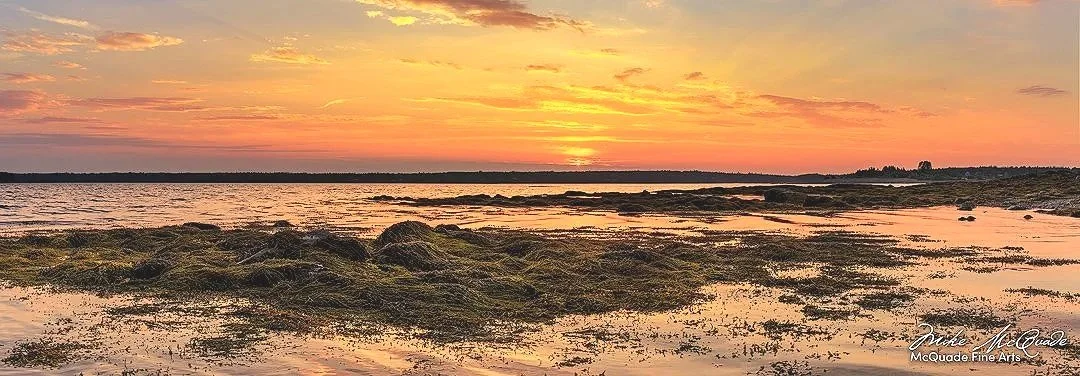
Though a week after the Summer Solstice, I still count this as a solstice image.
On a trip later that month to Acadia National Park, we managed to park the RV at the KOA campground near the entrance to Mount Desert Island. It is one of my favorite campgrounds—when we can actually get a site—because it looks west across the bay, which is exactly where a sunset photographer wants to be.
That evening had all the makings of something special. In recent years, wildfire smoke from the western United States has occasionally drifted east, adding fine particles to the atmosphere. While that is never good news at the source, those particles can scatter the evening light in a way that turns an ordinary sunset into something far more dramatic.
When I saw the color starting to build over Western Bay in Trenton, Maine, I grabbed my tripod and my Nikon and went hunting for a clean composition. The shoreline, however, had other ideas. Between the rocks, campers, and general waterfront clutter, every angle seemed to have something in the way.
So, naturally, I did what any perfectly reasonable photographer would do: I waded into the cold, rocky salt water up to my waist, with $5k worth of camera, lens and tripod. What could possibly go wrong?
Once I had the tripod planted firmly below the surface, I waited. The sky warmed into a soft orange glow, faint rays stretched across the bay, and the water picked up just enough reflection to make the scene come alive. But the detail that really made the image work for me was the floating seaweed in the foreground. It added texture, movement, and just enough wild Maine character to turn a pretty sunset into a memorable photograph.